Thursday, December 20, 2012

Our Hip Hop Montage:

Hip Hop Montage/Fast Cutting:
Fast cutting is a film editing technique which refers to several consecutive shots of a brief duration (e.g. 3 seconds or less). It can be used to convey a lot of information very quickly, or to imply either energy or chaos.

An Example:
Requiem For A Dream used a hip hop montage in one of their scenes to make it seem energetic and to show that what they where doing in the scene (taking drugs) was frequent.
What We Did:
We (Jenny, Frankie, Vincent and me) decided to do something related to this. We filmed our character (played by Frankie) making a cup of tea. We, like in the preliminary task, each filmed some of the shots and edited it on the media department's Mac.

Our Preliminary Task:

This was a continuity task involving filming and editing a character opening a door, crossing a room and sitting down in a chair opposite another character, with whom she/he then exchanges a couple of lines of dialogue. This task should demonstrate match on action, shot/reverse shot and the 180-degree rule.

We all took part in acting and we used the media department's Mac to edit our footage.

Our footage involved two students (Frankie and Jenny) talking about a celebrity. They are then interrupted by their teacher (Vincent). The celebrity (Christy) and the school secretary (Alex) walk through to the classroom and when they enter, one of the students (Frankie) says she's his biggest fan and then turns into a fan.


Thursday, December 13, 2012

Possible Quotes for the book:

For this opening sequence, it will contain a strange book that will relate to sociopathic personality disorder and insanity. This book will contain quotes and pictures about that subject.
These are some examples of what kind of quotes I would like in this book:
  • “There were a billion lights out there on the horizon and I knew that all of them put together weren't enough to light the darkness in the hearts of some men.”- Michael Connelly
  • “You are not a beautiful and unique snowflake. You are the same decaying organic matter as everyone else, and we are all part of the same compost pile.”- Chuck Palahniuk
  • “Sometimes the personalities at the helm of the madness industry are, with their drives and obsessions, as mad in their own way as those they study. And that relatively ordinary people are, more and more, defined by their maddest edges.” - Jon Ronson
  • “We serial killers are your sons, we are your husbands, we are everywhere. And there will be more of your children dead tomorrow.” - Ted Bundy
  • "The basic tool for the manipulation of reality is the manipulation of words. If you can control the meaning of words, you can control the people who must use the words.”- Phillip K. Dick
  • “Insanity: doing the same thing over and over again and expecting different results.”- Albert Einstein
  • “I wouldn’t recommend sex, drugs or insanity for everyone, but they’ve always worked for me.”- Hunter S. Thompson
  • “If you don’t where you’re going, any road will take you there.”- Lewis Carroll
  • “Half of the people lie with their lips; the other half with their tears.”- Nassim Nicholas Taleb

If I had to pick one that would definitely go onto the book, it's the Ted Bundy quote, because it relates to insanity, is extremely threatening and it's not very obvious, as he does not say anything that hints to his disorder.

Some of these quotes are too long or too specific to use so most of them will not be in the book, however, they are relating to the kind of quotes and pictures I wish to have in this book.

First draft of the script (and possible notes about the book):

A Sociopath's Charm 
Film story: A dark comedy about a man's search to solve a puzzle - a mysterious book - and through this journey explores the nature of the psychopath/sociopath

Opening sequence:

[Long shot of young man (Ben) at a table in a coffee shop, waiting. He is wearing a thick coat. There is a scarf, gloves and two cups of coffee on the table] [Diegetic sounds from inside and outside the coffee shop] [Natural light coming from the windows] [Shot in the present, either morning/midday/afternoon] [Possibly snowing outside] [Other people are in the coffee shop (volunteering actors)]

Voiceover (Ben): “This is a tale of insanity. [Pause] It starts with a rather odd meeting in a coffee shop."

[Zooms slowly in on him until it is a close up of his face]

"It was a place where the student psychologists from the nearby University took their breaks.

[Eyes look towards something off camera]

Here was one now."

[Medium shot moved 180 degrees the other way. A young woman (Lea) walks from the door of the coffee shop towards the camera . She is wearing a thick coat, scarf, gloves and red glasses. She is carrying a book]

[Medium, over the shoulder shot behind Lea on Ben as she sits]

Lea: "I'm Lea"

[Close up, over the shoulder shot on Ben]

Ben: "I'm Ben" [Two shot] [awkward pause] "Have you got it?"

[Medium, over the shoulder shot on Lea]

[Lea slides the book across the table, the camera follows it]

[Close up, over the shoulder shot on Ben]

Ben: "It's wonderful."

[Close up on book]

[Music - A capella humming tune (sung with 3 female harmonies) (non-diegetic)]

[Ben looks through the book]

[Turns a few pages. The book is then interspersed with titles. Possible close ups of Ben as he looks through the book. Poisslbe shots of a different able showing 'Edward's' hands writing the book]

[Second to last page of the book contains the title of the film]

"A SOCIOPATH'S CHARM"

Notes about the book:

In a package. Book has a sticker on it.
Around 21 pages long. Expensively produced. Every other page is blank. Some pages either contain pictures or quotes.
Title: The Unbearable Lightness
Cover picture: Escher's "A self-potrait in a reflecting globe"
Written by: Edward Nigma
Last Page: Good Luck (or something like that)

Friday, December 7, 2012

What Makes An Effective Opening Sequence?

The answer for this is pretty simple. The opening of the film must engage the audience. They have to be engaged by what they are seeing and they have to feel the need to continue watching the rest of the film and seeing it unfold. The key is to figure out what not to do first. I shouldn't spend all of the opening sequence showing the viewer an exposition, introducing my characters in detail, being too obvious with setting up the theme because that will end up boring the viewer. I should never show the character's back story in the first scene, it's for discovery later in the film. I should engage the audience, make them interested in my plot, I should introduce my characters briefly. What the audience needs to know in the first opening sequence is the tone, atmosphere and a brief explanation of what my characters have to look into but I shouldn't give everything away. It's about hooking the audience and making them need to keep on watching it.

Thursday, December 6, 2012

Opening Title Sequence Example:

Trainspotting

Camera Angles:
The scene starts with our protagonist (Renton) and his friend running through a town. There is a two shot close up showing that they are being chased by two security guards. It then cuts to a low angle shot of Renton and his friend's feet running, it also shows an item falling from their pockets. This scene hints to the fact that they have stolen something and have been caught. The two shots are repeated twice to show a distance growing between Renton and his friend. Then there is a low angle shot which shows the protagonist running down a set of stairs. This moves to a POV shot as he runs next to a wall, this shows his speed and that he is panicking. When a car pulls out in front of him, the camera pans and it shows a low angle shot as he runs into the car, it then shows another POV shot of the driver and watches as the protagonist rolls over the bonnet. It shows a low angle shot to show the excitement in this scene. It switches back to the POV shot when Renton gets up and stairs at the camera (the driver). This is then followed by a long of his friend running away from a security officer, showing he is no longer important in this scene.

Editing:
The cuts throughout this opening sequences are simple and neat, which represents Renton's personality later in the film, as he has a habit of frequently changing his mind. There are a few freeze frames which then show a character's name and the audience gets a quick showing of their personality by the actions they do just before the camera freezes. There are no lighting changes, making it simple and effective as it does not distract the audience and makes it more real.

Sound:
We hear the song 'Lust For Life' in this opening sequence, it's non diagetic and continues to play throughout the whole opening sequence. It does however get quieter when Renton speaks, also non diagetic as it's a narration. There is the faint sound of diagetic street noises in this, making the audience hear what's going on in it.

Mise-en-scene:
Renton and his friend where combat trousers and t shirts, it looks cheap and most likely 90's clothing, so the audience knows they're low class and the movie is set in the present day (as the movie was made in 1996).

Friday, November 30, 2012

Target Audience:

I have a basic idea of who the target audience might be for this sequence. It is not 100% accurate but it is who I want to appeal to:

I think the age range will be 13 and over because the plot that I had in mind for this will be complex, as it will mostly revolve around the protagonist studying a book that relates to a particular mental illness (most likely sociopathic personality disorder), and the younger generation might find it hard to follow.

The humour will probably be slightly dark and people under the age of 16 will have trouble understanding it. If the audience does not understand the plot, characters or humour that is mostly subtle, then they might take no interest in this as it does not contain any CGI effects or action, it will be a realistic as possible. I think that this will appeal to both genders. This film may interest people who have an interest in psychology and sociology as the protagonist will interview people and find out information that relates to the mental illness in the book.

The film 'Young Adult' is a dark comedy which is about a woman named 'Mavis Gary' going back to her hometown so she can get back together with her ex-husband, who is now married and has a child. This has the same target audience that might be interested in my idea because the film relies on subtle humour and development of Mavis.

Thursday, November 29, 2012

Examples Of The Genres I'm Using:

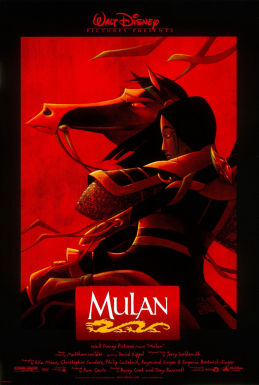
Comedy Drama: Mulan

What It's About: To save her father from death in the army, a Chinese maiden secretly goes in his place and becomes one of China's greatest heroes in the process.

Why It Works Well:
Though it's a Disney film and most of them seem like either romantic comedies or children's cartoons, this film does have a lot of drama in it. Most of the film has dark lighting to make it seem more sinister and the plot is very dramatic for a children's film, some of the scenes are extremely dark for it's age group (for example, the antagonist, Shan Yu, kills a messenger for no reason). All the humour is from the comic relief characters (e.g. Mushu), the protagonist, Mulan, doesn't have any humorous lines (or at least not memorable ones) because we focus on her story, not on her lines. This works well because it's still enjoyable for children with the comedy but it does send a message to them also.

Dark Comedy: American Psycho
What It's About: A wealthy New York investment banking executive hides his alternate psychopathic ego from his co-workers and friends as he escalates deeper into his illogical, gratuitous fantasies.

Why It Works Well:
It combines horror/thriller with comedy.The opening sequence starts with blood dripping onto a white background with classical music playing, we then find out that the blood is actually just sauce being decorated onto a plate in an expensive looking restaurant, this links in with the character 'Patrick Bateman' as he is psychopath who kills people in his spare time and has a love for different genres of music but he has to hide his dark secret from his co-workers. This film sometimes has humourous moments as they put a lot of funny dialogue into the movie but it's still extremely dark and disturbing as Patrick rapes and kills people, it's a strange combination but it works well.

True Story: Amadeus


What It's About: The story of Wolfgang Amadeus Mozart, told in flashback by his peer and secret rival Antonio Salieri - now confined to an insane asylum.

Why It Works Well:
It's a interesting view on the life of musical composer Mozart. Though not 100% accurate it does seem believable and the use of dark lighting and natural lighting makes it seem like it is set in that period of time and also creates a sense of tragedy. The music that is used is mostly the ones Mozart has composed so it also fits that period and links in with the plot. It contains characters that act in a realistic manner so the viewer can tell that they are based off of real people. With the main character, Antonio Salieri, doing a voice over for most of the film, it seems like the viewer is seeing it through Antonio's eyes, making the viewer sympathize with him and get a better understanding of the plot and characters.

Tuesday, November 27, 2012

Character Descriptions:

There are two character's in this opening sequence; the protagonist (Ben) and a minor character (Lea). They both share a number of characteristics and appear equal to each other. The physical appearance are based on the actors who will possibly play them and it fits their personality (e.g. the glasses on Lea show a sign of intelligence). The viewer will judge the character by the way they look, how they speak, their body language, their choice of words, etc.

  • Ben: He is a blonde haired, blue eyed man in his early 20's and is most likely middle class as his clothes (thick coat, gloves, scarf) don't look expensive or cheap and he is sitting in a simple but pleasant looking coffee shop. He has a little stubble, showing he either forgot to shave or he thought it wasn't necessary for the interview. On his table, there is a notepad, a pen and two cups of coffee, indicating that he works as a journalist and is waiting to interview the second character in this sequence. His eyes tend to wander or stare at random objects and it seems like he daydreams a lot as he also has a monologue going on in his head (the voice over). His hands always seem to fidget during the opening sequence which shows him to be very nervous in that situation. He smiles widely twice during the sequence; the first time is when the other character arrives and the second time is when he is handed a book, this shows that he is easily excited by new people and objects. When he talks to the other character, his voice tends to stutter a little and is more high pitched than when he was speaking in his voice over, there is also an awkward pause between the two characters; he looks down, stops smiling and fidgets a little, showing that he may suffer a little from social anxiety and he seems uncomfortable in this situation.

  • Lea: She is a blonde/ginger haired, hazel eyed woman who is around the age of 16 to 20. She, like Ben, appears middle class because of her clothes (thick coat, gloves, scarf). She wears a pair of red glasses which hints to a possible problem with her eyesight. In Ben's voice over, he states that she is from a local University and is a student psychologist. She seems rather confident at first as she stands tall when walking to him and she says her first line with a calm smile. However, after a long pause of silence, she, like Ben, fidgets a little and appears to have forgotten what to say next. When the camera is focused on her, it shows that she has a tired expression, her hair looks unkept and she is extremely pale, this hints to a lot of things; she works a lot so she doesn't get much sleep, she rarely goes outside and she's not interested in her physical appearance. She clutches a book to her chest and seems unsure about giving it to Ben when he asks for it, like she has an obsession with it or has a problem with trusting people she's just met.

Friday, November 23, 2012

The Effects Of Simple Editing:

Simple editing is just basic editing. There are no fancy effects and the takes of each shot will either be long (for the voice over and focusing on the book) or at least longer than a second. This is so I do not distract the viewer from the plot, character and titles. I wish to not make it over detailed as the genre (drama comedy/dark comedy/real life) will not fit it but I will still put a lot of effort into the editing so it works with the opening sequence. I will most likely use iMovie to help me edit and use the feature called 'skimming' to help identify the best parts of my video for later viewing and editing.
                                                     The opening sequence of 'American Beauty' uses simple editing
                        and long shots to make the audience focus more on the voice over and the characters in the scene.

Thursday, November 22, 2012

Camera Angles/Effects (Zoom In/Close Up/Two Shot/Medium Shot):

Zoom In: Zoom lenses are used by many directors, this is to try to give the impression of movement and excitement in a scene where it does not exist. However, I will be using this is create focus to the protagnist as you can hear his voiceover and see his facial expression as he waits for the other character, it will start at a long shot so you can see the coffee shop and it will then zoom in to his face until his notices something. I can use the zoom lens on my camera for this effect.

                            In the sci fi TV show 'Doctor Who' a lot of zoom ins are used to create tension and sometimes
                           fear but sometimes this can be too extreme and makes the audience more amused than nervous.

Close Up: Close ups show very little background and will concentrate on the faces of my two characters or the book in my opening sequence. Everything else will probably just be a blur in the background. This shot magnifies the face or object and will show the importance of it, or show the facial expression of my characters. I am using this to make the viewer seem comfortable about my character. This also links back to my idea of a zoom in and it stops when we have a close up of my protagonist's face.
                             The opening sequence of 'the Rocky Horror Picture Show' shows an extreme close up
                        of the lips of the character 'Magenta' miming the words to 'Science Fiction Double Feature' sung
                              by 'Riff Raff'. This makes the audience interested in the film and all the focus is on the lips.

Two Shot: Two shots are good for establishing a relationship between my two characters. They will  have an equal prominence in the frames and will provide equal input. The two shot is one way to introduce my characters. It is a good way to follow the interaction between the characters without getting distracted by their surroundings.
                       In the film 'the Hunger Games' it mostly shows action but in the scenes where 'Katniss' and 'Peeta' talk,
                                           it shows a lot of two shots to make the audience focus on what they are
                                                 saying and not get distracted by what's going on around them.

Medium Shot: This will contain my characters from the waist up and will be used when introducing my character, to show a detail of an action and when they talk. A variation of this include the two shot, which I have explained about before. Background detail is minimal because location has been established earlier in my opening sequence and I now want to focus on dialogue and character interation. I will also use over the shoulde shots which position the camera behind one of my characters, revealing the other character, and part of my first character's back, head and shoulder.
                   In the film 'Batman Begins', the audience has already been introduced to the character 'Jonathan Crane'
               and we already know what the setting of this scene looks like so now it shows over the shoulder medium shots
                                                    of the character and the audience just focuses on his conversation.

Wednesday, November 21, 2012

Sound In An Opening Sequence (Voice-over/Dialogue/Music):

Voice-over: Voice-over (also known as off-camera or off-stage commentary) is a production technique where a voice that is not part of the narrative (non-diegetic) is used in a film. The voice-over may be spoken by someone who appears in my opening sequence (in this case: the protagonist). It should be pre-recorded and placed over the top of the sequence. It is commonly used to explain information and/or thoughts of the character.
                                                                   The comedy TV Show 'Scrubs' is well known for it's
                                                    protagonist 'JD' to do voice-overs of his thoughts in particular scenes.

Dialogue: Dialogue serves many purposes for for the sceenplay and can be used in different ways:
  • It moves the story forward
  • It imparts information
  • It breaks action
  • It controls pace
  • It defines the character
  • It creates tension
However, it is important to know when not to use dialogue:
  • If it does not fulfil any of the purposes listed above
  • If the purpose of the dialogue could be better illustrated by action. Body language often creates more tension than overt expression
  • If it appears to try too hard by being spouting and wordy.
  • Cut down if it is more than ten lines long, unless the lengthy monologue is serving to illustrate a character trait or unusual situation.
  • Chit-chatty discourses.
  • If it repeats information
To write a script with realism not every question requires an answer. I should consider vagueness and non-replies. Action that contradicts what is being said can say a lot. This is known as 'subtext'. The script I'm using will not have much dialogue but I want my characters to not distract the audience from the main focus (the book) so they will be much action in this sequence.


                                                   The dialogue in the opening sequence of 'Pulp Fiction' is only a few lines long but is
                                                          extremely effective in making the audience excited and amused.

Music: Songs are used in movies to show all kinds of emotions. For example, a romantic setting is enhanced by an appropriate love song. Music has been used to make people laugh and cry. In fact a story itself can be narrated through songs. For the song I'm recording for this opening sequence, I could use low priced recording studio equipment and I can set up a home recording studio with little effort. However, I plan on just using vocals for my piece so I could just get a microphone and record my voice onto 'GarageBand' and repeat this till all the harmonies of my song are completed.
                                                           The songs used in the James Bond movies (known as 'Bond Themes')
                                          are used in the opening sequence so the audience gets an idea of what type of movie it will be.

Natural Lighting Technique:

I can use the natural light coming through the doors and windows in the setting I'm using. I will have to pay lots of attention to where the light is coming from when I am doing this as the light, even on a cloudy day, will be hard because it's coming in through the doors and window and if I include open doors or windows in my sequence, they will possibly burn out because they are so bright compared the interior. The good thing about natural light is that is can be slightly dramatic and maybe even moody at times, it also makes the scene more realistic, hinting to it's genre (comedy drama/dark comedy/real life).

                                                                                      Example of natural lighting

Tuesday, November 20, 2012

Progress (November)

What I Have Done So Far:
  • Written the basic plot for the opening sequence
  • Written most of the script
  • Decided the actors who will be playing the 2 characters in the scene
  • Decided on the type of music that will be in this scene and how it will be performed
  • Decided on the how I want the titles to appear
  • Completed the focus group questionnaire
What I Still Need To Complete:
  • Put up the video of the focus group
  • Record examples of the music
  • Complete the script and mood board
  • Ask an actor if he would be willing to help
  • Find a coffee shop to film in
  • Work out how to make titles work
  • Work on which camera angles will work
  • Design the book for the scene

Sunday, November 18, 2012

Possible idea for opening sequence titles


Change In Ideas

After a lot of research over this weekend, I've decided to do a different genre.
Genre: Comedy Drama/Dark Comedy/Real Life
Inspiration: American Beauty, Clockwork Orange, Reservoir Dogs, Pulp Fiction, Juno, Rocky Horror Picture Show, Trainspotting (these films are where I got the idea that voiceover, music, and simple establishing shots work best in an opening sequence, this wouldn't work with a psychological horror)
Characters: 2 characters: Protagonist (Gender: Male, Age: Early 20s) and minor character (Gender: Female, Age: 20)
Main Prop: Book: A mysterious object, which may also contain the title sequences, looks expensively produced (will be the main focus with the main character of the 'film')
Setting: Coffee Shop (Possibly snowing outside so character's are dressed in thick coats and scarfs)
Time: Present Day
Lighting: Natural
Sound: Voiceover (from main character), Dialogue (from both character), A capella humming tune (3 female harmonies)
Camera: Zooming in, Close up (on character's face and book), Two shot, Medium shot
Editing: Simple editing (not many shots)

Storyboard/Camera Shot Ideas

[discarded idea]

1.      Opening shot: Living room (victim’s house), dark lighting (evening), atonal piano music, diegetic sounds, long shot on glass, pans across slowly to mid shot of victim, victim: shows the side of victim, calm expression, looking down on papers, seated, 18 years old/female/casual clothes, window and TV seen over shoulder, she’s reading
1.      High angle close up shot on victim’s face, she turns a page
2.      Turns back to mid shot on her side, TV turns on, she’s startled, sound of news report on TV
3.      Close up of victim’s head turning towards TV
4.      Mid shot of news report on TV
5.      High angle close up shot on victim’s face, her head still turned towards the TV
6.      Mid shot of victim, news report stops as she turns off the TV and looks back to her book
7.      Mid shot of victim looking down at her book, long shot of the window takes up most of the shot, tapping is heard, changing focus from the victim to the window
8.      Mid shot of victim’s right side, turning a page, tapping is faint but still heard
9.      High angle shot of the window, a thump is heard when a hand smacks against the window
10.  Extreme close up of victim’s eyes turning to the window
11.  Mid shot of victim, window covers of most of the frame, hand is gone, tapping’s gone, piano stops
12.  High angle close up shot on victim’s face
13.  Long shot of the victim, stands up, piano music starts
14.  Mid shot of the victim’s legs as she walks out of the room
15.  Hallway, long shot shows victim’s back is turned as she walks towards the front door, loud locking noise is heard
16.  Panning mid shot of victim walking towards bookcase, darkened figure at the top of the stairs, victim gets book from bookcase
17.  Mid shot of victim’s left side as she looks down at a book, long shot of front door, changing focus from the victim to the front door, tapping is heard again
18.  High angle side mid shot of figure behind front door, a thump is heard as the figure bangs her fist against the door, tapping stops, piano music stops
19.  Close up on victim’s face as she looks at the bookcase with a scared expression
20.  Mid shot of victim’s left side as she continues to stare at the bookcase, the long shot of the front door shows that the figure is still there, piano music starts up again
21.  Close up on victim’s face as she calms down
22.  Panning shot of victim’s legs as she walks back to the front door
23.  Long shot shows the victim walking to the kitchen and the figure isn’t seen behind the door anymore
24.  Mid shot inside the kitchen shows the victim walking in
25.  Mid shot hides her head as she goes to the fridge and opens it, taking out a glass of liquid
26.  Mid shot on the victim’s left side shows her closing the door, changing focus from victim to the outside kitchen door
27.  Low angle long shot of the kitchen, the victim is in the corner, a thump is heard, she turns around
28.  Extreme close up of her eyes turning towards the front door in the hallway, piano stops
29.  Mid shot of her legs shows the glass smashing on the floor
30.  Mid shot shows her facing towards the hallway door, the side of the front door shows the figure isn’t there
31.  Mid shot shows her other side, she looks scared and is breathing heavily
32.  Low angle long shot of the kitchen, another bang is heard
33.  Quick mid shot shows her walking backwards towards the other side of the kitchen, banging continues
34.  Quick close up of her feet moving backwards, the sound of a door creaks open
35.  Mid shot of the victim’s side as looks towards the hallway door, on the other side of the frame, a small of the figure is shown
36.  Low angle mid shot shows victim’s head turning round to face figure
37.  Close up of a darkened hand as it reaches out to the victim
38.  Quick zoom in as the victim’s backs into a corner
39.  Close up of victim’s hand groping the counter, trying to find something
40.  Extreme close up of victim’s eyes as she looks away from the figure to the counter
41.  Extreme close up of her grabbing a knife
42.  Quick close up of the figure as the victim turns towards her with the knife
43.  Close up of the counter as a scream is heard and blood splatters across the worktop, the title is shown, the piano music starts up again

Tuesday, November 13, 2012

Final Destination 2's Opening Sequence

-->
The sequence starts with the logo and you can hear very faint atonal music playing in the background. The logo fades to black and then fades in on an extreme close up of a man’s face; he is talking directly to the camera and his face is slightly blurred which indicates that the camera is filming a TV screen, he is talking about the happenings that were in the first Final Destination film, which shows that and this film are linked together. As the camera zooms out, the credits are at the bottom of the screen so it does not distract the viewer from what is being shown. The camera fades out on the man and in on a close up of a face, from a puppet or poster of some kind, it is in a bedroom, this is darkly lit, this creates a creepy atmosphere and the face is designed to freak out the audience as it does not look like the typical thing you would have in a bedroom. It then shows the title ‘FINAL DESTINATION 2’ it is in capitals and is a much bigger format than the other credits shown, a brass instrument is heard and is much louder than the faint music being played with it, this is to attracted the audience’s attention. The camera fades out on the face and fades in on photos of the protagonist, the camera is moving slowly so we can see everything, the lighting is still dark to keep the sinister atmosphere. The camera looks through a magnifying glass and shows a close up of a photo of the protagonist with a scalpel pointing towards her face, this shows the movie main focus; which is cheating death. There is a high angle middle shot on a puppet to create more of a creepy atmosphere and you can hear there is a different man talking on the TV, who is still discussing the events of the last film. There is an extreme close up of the protagonist’s hand, which twitches a few times, this makes it seem like she’s dead when really she’s still alive but it still creates a scary feeling to the atmosphere, the music gets louder and higher, possibly to indicate that this is the main character of the film.

Sucker Punch's Opening Sequence

-->
The first scene of the opening sequence is a darkly lit stage, this creates a mysterious effect and the stage makes it seem more like a story or a play than a film. The stage lights up to show the logos, and audio of the second main character is heard, she seems to be whispering which adds to the mysterious effect. Slow, quiet music is heard playing in the background, which makes the atmosphere chilling and gloomy. The curtains lift to show a long shot of the protagonist’s room, it is all still set up like a stage and the character’s back is turned, making her seem trapped. The speaking stops when the camera zooms in for a close up on the protagonist’s face and lyrics from the music is heard, we can see she is shaking and she has a terrified look on her face, the stage is no longer seen and the room looks like an ordinary bedroom, it is raining outside and the lighting is still dark, this is to show the audience that it’s going to be a rather dark and sinister film, the protagonist is showing signs of fear, which tells the audience that something bad will or has happened to her. A middle shot shows a doctor in the hallway shaking his head; this is a quick edit as he is an unimportant character. The protagonist runs out the room, she is shown to be much smaller than the doctor, this shows that she is very weak in the situation. For the rest of the sequence it’s all in slow motion to make it dramatic and so we can see all the emotions on each character. When there is a close up outside the window, we can hear a cry from the protagonist and her sister, everything being said in this sequence is off-camera so they do not distract us by speaking. A middle shot shows us that the protagonist’s sister has entered the room and there is a close up of their knees as they fall to the ground, in these shot they very close to each other, this shows a strong relationship. The music gets louder and, there is an extreme close up of the sister’s hand and a close up of a corpse’s face as the sheets are taken off her, this shows that the corpse was an important character to the protagonist and the lightning makes her face light up for a second, which makes her seem like the only good thing in the protagonist’s is gone, this makes the scene very dramatic and tragic.

Friday, November 9, 2012

Brief Summary of My Opening Sequence

[discarded idea] 

Genre: Psychological Horror (subgenre of horror fiction that relies on characters' fears and emotional instability to build tension)
Inspiration: Clock Tower (game), Final Destination 2’s opening sequence, Paranormal Activity
Characters: 2 characters (Victim and villain) (Both female) (One aged around 18-20, the other is unknown)
Setting: House (home of the victim)
Time: Present day
Lighting: Dark lighting
Sound: Sudden loud noises (banging on the door) (glass smashing) (screaming), atonal piano music (non-diegetic), dialogue (TV playing in the background for a few seconds)
Camera Angles: Close ups, extreme close ups, low angle (on villain), zooming
Editing: Short takes